
Stomach (Gastric) Cancer
A serious cancer that usually develops slowly from chronic inflammation, often from H. pylori. When caught early, cure rates are high.
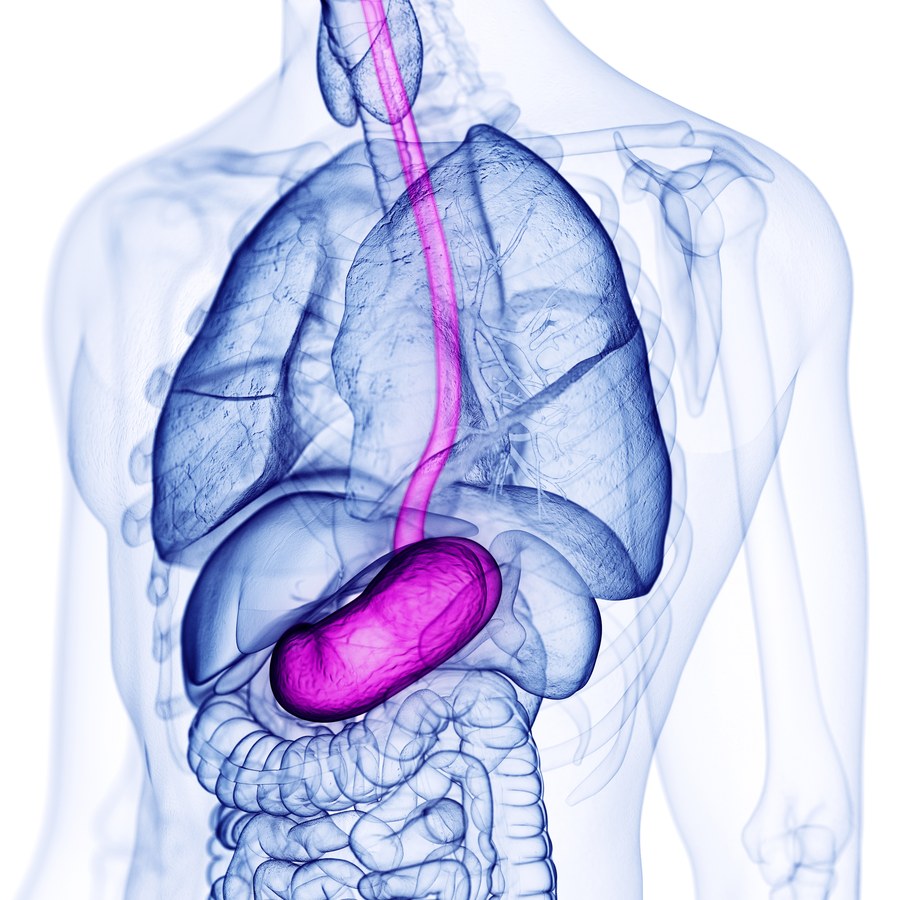
Category
Serious
Red flags
3
This article is educational and does not replace your doctor's advice. Seek urgent care for any red-flag symptoms.
What is it?
Gastric cancer most often starts in the stomach lining and grows over years. The most common type is adenocarcinoma. Over decades, H. pylori inflammation can lead to atrophy → intestinal metaplasia → dysplasia → cancer — a sequence called the Correa cascade.
How common is it?
Gastric cancer is the 5th most common cancer worldwide and is more common in some Saudi regions than others. Major risk factors: H. pylori infection, smoking, family history, atrophic gastritis, intestinal metaplasia, salty/smoked diets.
Why does it happen?
The dominant cause is long-standing H. pylori infection — about 90% of non-cardia gastric cancers. Other factors: high salt and smoked food intake, smoking, family history (particularly E-cadherin gene mutations), pernicious anemia, prior partial gastrectomy.
Symptoms
- Often NO symptoms in early stages — the reason early diagnosis is hard
- Indigestion or burning that doesn't respond to usual treatment
- Early satiety — feeling full after very small meals
- Persistent nausea or vomiting
- Unintentional weight loss
- Iron-deficiency anemia (often the first sign)
- Black stools or visible blood
Red flags — seek urgent medical care
ANY of the symptoms above persisting more than a few weeks, especially over age 45
Endoscopy needed promptly.
Vomiting blood or coffee-ground material
Emergency.
Hard mass felt in the upper abdomen
Urgent evaluation.
How is it diagnosed?
Upper endoscopy with biopsy is the standard. Modern techniques (narrow-band imaging, magnified endoscopy) can detect very early cancers. After diagnosis: CT or PET to stage the cancer; endoscopic ultrasound (EUS) for depth; sometimes laparoscopy.
What the latest science says
Immunotherapy combined with chemotherapy has improved survival for advanced gastric cancer. Targeted therapies for HER2-positive (~15% of cases) and CLDN18.2-positive cancers are changing outcomes. Endoscopic submucosal dissection (ESD) cures very early cancers without surgery.
Outlook — what to expect
Stage matters enormously. Stage I (limited to mucosa or submucosa): >90% 5-year survival, often cured by endoscopy alone. Stage II–III: surgery + chemotherapy, 30–60% 5-year survival. Stage IV: median survival ~12 months but improving with immunotherapy.
Treatment
Habits & Lifestyle
Prevention focuses on H. pylori treatment, lifestyle, and screening in high-risk groups.
- Eradicate H. pylori if positive — reduces cancer risk by 30–40%.
- Stop smoking.
- Limit smoked, salted, and pickled foods.
- If you have family history or early gastric polyps, ask about screening endoscopy.
Diet
A Mediterranean-style diet is associated with lower risk.
- Plenty of fresh fruit and vegetables — protective.
- Reduce red and processed meat, especially smoked or salted.
- Avoid very hot beverages (links to esophageal/gastric cancer in some studies).
Medications
Treatment depends on stage and biomarkers — and is rapidly evolving.
- H. pylori eradication for prevention if positive.
- Chemotherapy (typically FLOT or FOLFOX combinations) before AND after surgery for resectable disease.
- Trastuzumab (Herceptin) added if HER2-positive.
- Immunotherapy (nivolumab, pembrolizumab) for advanced disease.
- Zolbetuximab for CLDN18.2-positive advanced cancers.
Procedures & Surgery
Procedural options range from endoscopic cure to major surgery.
- Endoscopic submucosal dissection (ESD) — for very early cancers; cure without surgery.
- Partial or total gastrectomy with lymph node dissection — standard for invasive cancers.
- Palliative procedures (stents, surgical bypasses) for obstruction in advanced disease.
In the Saudi context
Several Saudi tertiary centers (KFSH, KFMC, KAMC) perform ESD for early gastric cancer. Multidisciplinary tumor boards are standard. Insurance covers all standard treatments; some immunotherapy and targeted therapy may require pre-authorization.
Questions to ask your doctor
Save this list or print it before your appointment — doctors appreciate prepared patients.
- What stage is my cancer?
- Should my tumor be tested for HER2 and CLDN18.2?
- Am I a candidate for ESD instead of surgery?
- Should my family members be screened?
Medically reviewed by: SGA Patient Education Panel · Last reviewed 24/04/2026