
Stomach Polyps
Small growths inside the stomach lining — usually benign, often found incidentally during endoscopy. Some need removal or biopsy depending on type.
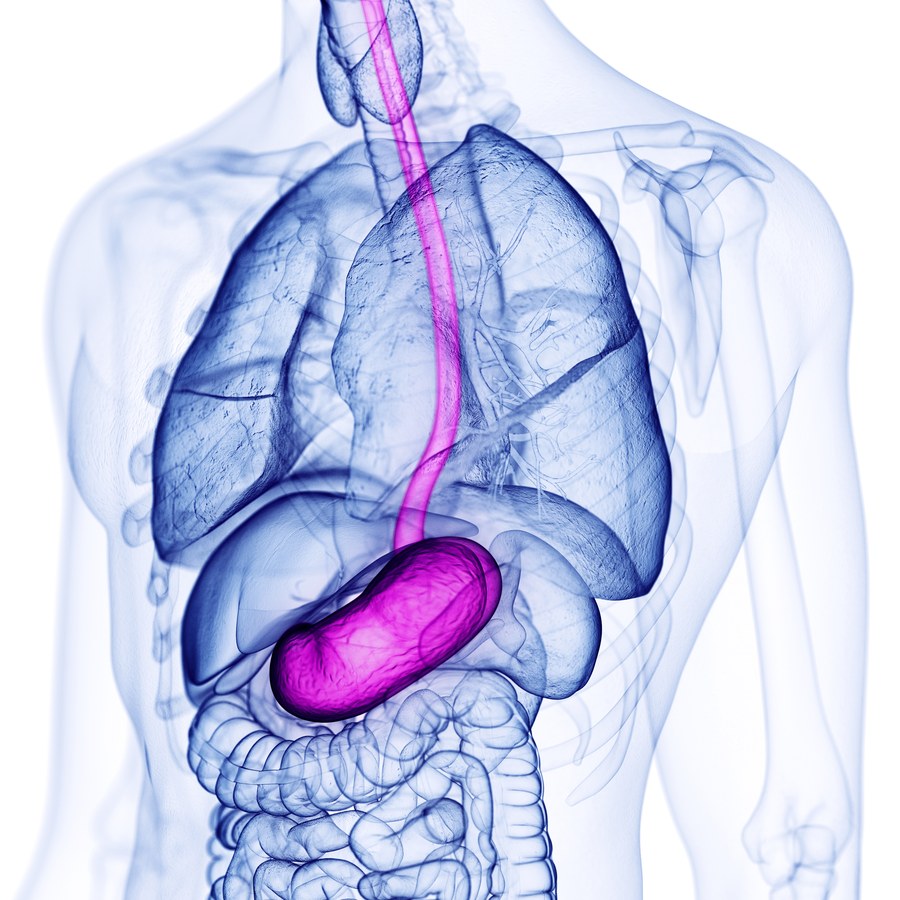
Category
Common
Red flags
2
This article is educational and does not replace your doctor's advice. Seek urgent care for any red-flag symptoms.
What is it?
Stomach polyps are abnormal growths of the stomach lining. The three main types are: fundic gland polyps (most common, almost always benign, often related to PPI use), hyperplastic polyps (related to inflammation, sometimes from H. pylori), and adenomatous polyps (precancerous, need removal).
How common is it?
Found in 5–8% of all upper endoscopies. Increasing with widespread PPI use. More common with age.
Why does it happen?
Fundic gland polyps are linked to acid suppression (PPIs). Hyperplastic polyps form in response to chronic inflammation, including H. pylori. Adenomatous polyps are pre-cancerous changes; some are linked to genetic syndromes (FAP).
Symptoms
- Almost always silent — found by chance on endoscopy
- Rarely: indigestion, mild abdominal pain
- Very rarely: bleeding (anemia or melena) from large polyps
Red flags — seek urgent medical care
Black stools or visible blood
Investigate.
Strong family history of stomach cancer
Consider genetic counseling.
How is it diagnosed?
Found on upper endoscopy. The endoscopist usually takes biopsies to determine the type. Adenomatous polyps and large polyps (>1 cm) are usually removed entirely. Multiple polyps may prompt H. pylori testing and consideration of FAP (a genetic syndrome).
Outlook — what to expect
Excellent for fundic gland and hyperplastic polyps. Adenomatous polyps need removal and follow-up to prevent cancer.
Treatment
Habits & Lifestyle
Most stomach polyps need no lifestyle changes.
- If you have multiple fundic gland polyps and have been on PPI long-term, ask about reducing the dose.
- Eradicate H. pylori if positive — many hyperplastic polyps shrink or disappear.
Diet
No specific diet for polyps.
- Standard healthy diet.
Medications
Medication management depends on polyp type.
- PPI step-down or switch to H2 blocker for fundic gland polyps in some patients.
- H. pylori eradication for hyperplastic polyps.
Procedures & Surgery
Polypectomy is straightforward in most cases.
- Endoscopic removal — most polyps removed at the same endoscopy.
- Surveillance endoscopy every 1-3 years for adenomatous polyps or extensive polyposis.
Questions to ask your doctor
Save this list or print it before your appointment — doctors appreciate prepared patients.
- What type of polyp do I have?
- Do I need to come back for surveillance?
- Should I reduce or stop my PPI?
Medically reviewed by: SGA Patient Education Panel · Last reviewed 24/04/2026