
GERD (Acid Reflux)
Heartburn that keeps coming back. Lifestyle changes plus medication relieve it for most people.
This article is educational and does not replace your doctor's advice. Seek urgent care for any red-flag symptoms.
What is it?
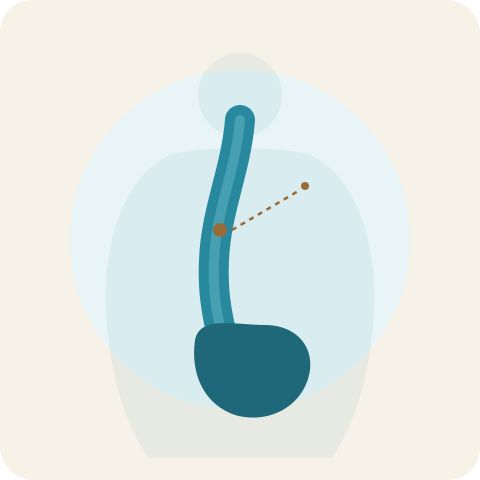
Gastroesophageal reflux disease (GERD) happens when stomach acid backs up into the esophagus (the food pipe) regularly enough to cause symptoms or damage. The valve between the stomach and esophagus, called the lower esophageal sphincter, normally keeps acid down — in GERD it is weak or relaxes at the wrong times.
Occasional heartburn is normal. GERD is when symptoms occur at least twice a week, disturb sleep, or cause complications like inflammation of the esophagus.
How common is it?
Around 20% of adults in the Gulf region experience GERD symptoms weekly — one of the highest rates worldwide, driven by obesity, diet, and smoking patterns. About 1 in 4 Saudi adults has had typical reflux symptoms in the past month.
Why does it happen?
The valve at the bottom of the esophagus weakens or relaxes inappropriately. Common contributors: being overweight (especially abdominal fat), pregnancy, hiatal hernia (part of the stomach pushed up into the chest), eating large meals, eating late, smoking, fatty or spicy food, caffeine, and certain medications (calcium channel blockers, nitrates).
Symptoms
- Heartburn — a burning sensation behind the breastbone, often after meals or when lying down
- Regurgitation — sour or bitter fluid backing up into the throat or mouth
- Chronic cough or throat clearing, especially in the morning
- Hoarseness or sore throat
- Difficulty swallowing or feeling food stuck
- Asthma-like wheezing in some patients
Red flags — seek urgent medical care
Difficulty or pain swallowing that is getting worse
Needs urgent endoscopy to rule out stricture or cancer.
Vomiting blood or coffee-ground material
Possible bleeding ulcer — emergency department immediately.
Black, tarry stools
Sign of upper GI bleeding — needs urgent assessment.
Unexplained weight loss
Always investigate — may indicate cancer or stricture.
How is it diagnosed?
Most GERD is diagnosed clinically — your doctor listens to your symptoms and starts a treatment trial. Upper endoscopy is recommended if there are red-flag symptoms, persistent symptoms despite treatment, or you are over 50.
24-hour pH monitoring confirms acid reflux objectively when the diagnosis is unclear or before considering surgery. Esophageal manometry measures muscle function — done before anti-reflux surgery.
Outlook — what to expect
Excellent for most patients. Lifestyle changes alone control mild GERD; PPIs control 80–90% of moderate-to-severe symptoms. A small minority need surgery. Untreated GERD can lead to esophageal inflammation, stricture, or rarely Barrett's esophagus — which is why persistent symptoms should not be ignored.
Treatment
Habits & Lifestyle
Lifestyle changes work — and reduce the dose of medication you need.
- Lose weight if overweight — even 5–10% reduction often eliminates symptoms.
- Stop eating 3 hours before bedtime.
- Raise the head of the bed by 15 cm (use blocks under the bedposts, not extra pillows).
- Quit smoking and avoid second-hand smoke.
- Wear loose-fitting clothing — tight belts and waistbands push acid up.
- Eat smaller, more frequent meals instead of two large ones.
Diet
Trigger foods vary person-to-person — keep a 2-week diary to identify yours.
- Common triggers to test: coffee, chocolate, mint, fatty fried foods, tomatoes, citrus, spicy food, alcohol.
- Avoid carbonated drinks — they distend the stomach and push acid up.
- Limit chocolate, mint, and high-fat dairy near bedtime.
- Drink water with meals; avoid drinking large volumes during meals.
Medications
Medications are highly effective. Step up if needed; step down once stable.
- Antacids (Maalox, Gaviscon) — fast relief in minutes for occasional symptoms.
- H2 blockers (famotidine 20–40 mg) — for mild reflux or as-needed dosing.
- PPIs (omeprazole, pantoprazole, esomeprazole 20–40 mg before breakfast) — first-line for moderate-to-severe GERD. Take 30 minutes before food.
- Step-down trial after 8 weeks of symptom control — try alternate-day or as-needed PPI.
Procedures & Surgery
Surgery is reserved for severe GERD that does not respond to PPIs or where lifelong medication is undesirable.
- Laparoscopic Nissen fundoplication — wraps the top of the stomach around the lower esophagus. 80–90% effective long-term.
- LINX magnetic device — a ring of magnetic beads that strengthens the valve. Less invasive but newer.
- Endoscopic procedures (TIF) — newer and less invasive for selected patients.
Living with the condition
- Keep a small bottle of antacid at work and in the car for breakthrough symptoms.
- If your GERD only happens at night, an evening PPI dose might work better than morning.
- Track your trigger foods — most people have 3-4 specific ones rather than a long list.
In the Saudi context
GERD prevalence in the Gulf region is among the highest in the world — driven by rising obesity rates, late-night eating culture, and frequent consumption of fried/spicy food. Sehhaty offers digital consultations for chronic GERD; PPIs are widely available and inexpensive. Endoscopy services are accessible at all major centers.
Questions to ask your doctor
Save this list or print it before your appointment — doctors appreciate prepared patients.
- Should I have an endoscopy?
- Can I taper off my PPI?
- Am I a candidate for anti-reflux surgery?
- Could my chronic cough or hoarseness be from reflux?
Medically reviewed by: SGA Patient Education Panel · Last reviewed 24/04/2026